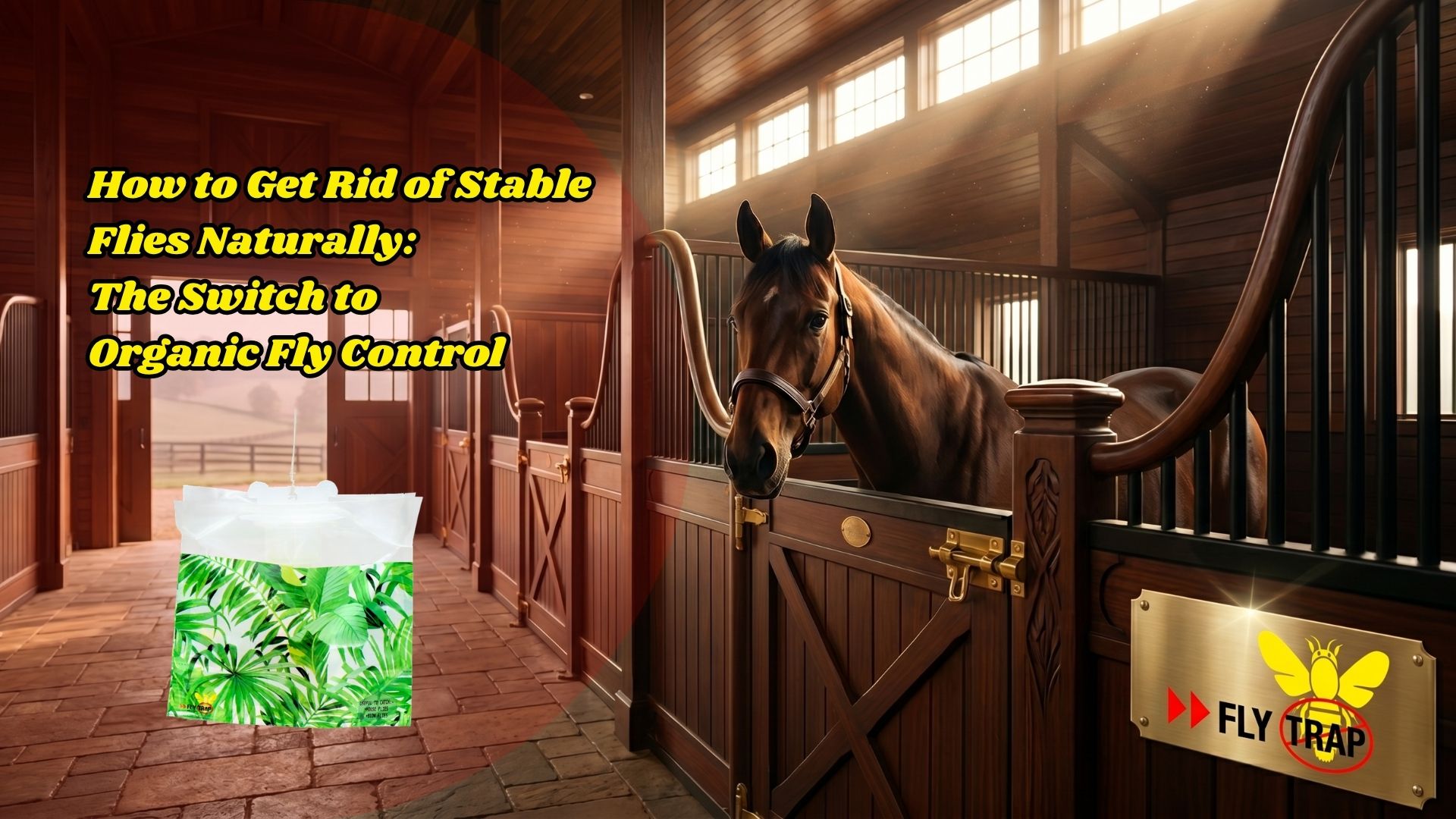
There is a specific serenity found only in a horse stable at dawn. The smell of fresh hay, the soft snort of a mare greeting the morning light—it is a picture of perfection, until the soundtrack is ruined by the buzzing of the common house fly and the biting stable fly.
For decades, the equine industry’s standard response to this invasion has been chemical warfare. But as stable management evolves, stud managers and owners are moving away from the “spray and pray” method. The question still remains – how to get rid of stable flies in stud farms and protect your horses?
We have the answer now!
Today, the focus is on smarter, safer, and highly effective organic fly control for horses.
Here is why the smartest stud managers are trading the hazmat suit for the passive power of organic traps.
Why Stable Flies Are More Than Just an Annoyance
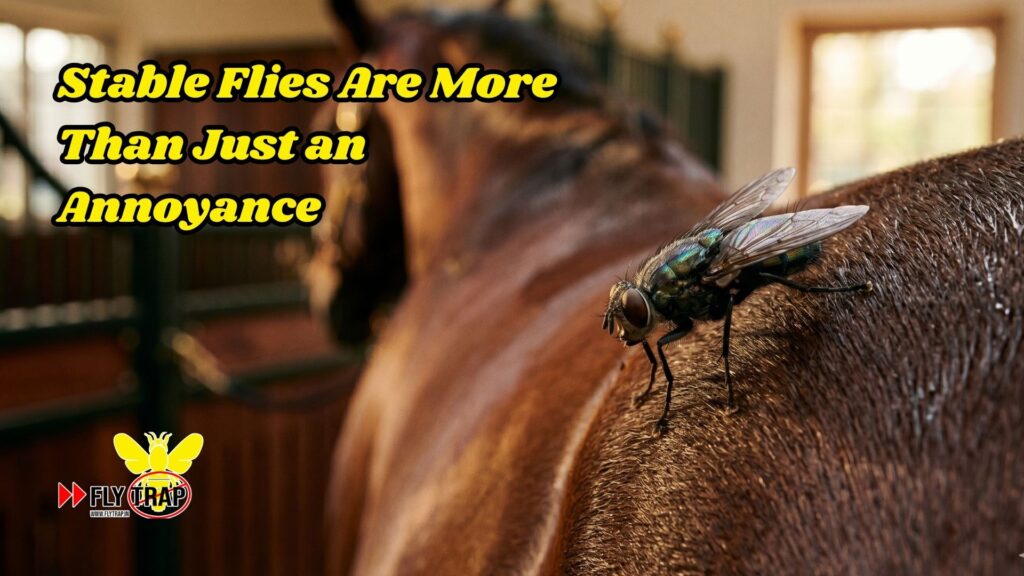
We often view flies merely as pests, but in a stable environment, they are significant stress vectors. Every stomp of a hoof, frantic swish of a tail, and ripple of the skin is energy wasted. For a high-performance show jumper or a broodmare, that low-grade, constant stress accumulates.
Beyond the annoyance, flies are verifiable health hazards. According to veterinary research, severe fly infestations can lead to:
- Weight Loss and Fatigue: Horses expend massive amounts of calories constantly moving to evade bites.
- Disease Transmission: Flies are known vectors for conditions like Equine Infectious Anemia (EIA) and summer sores (Habronemiasis).
- Hoof and Joint Damage: Relentless stomping on hard ground can cause concussion-related injuries.
The Hidden Costs of Chemical Fly Sprays for Horses
Historically, when the buzzing reached a crescendo, we reached for the bottle. Chemical sprays, pyrethrin misting systems, and toxic strips have been the industry standard. While they offer temporary knockdown, the long-term costs are high.
To control a biological problem, we introduce synthetic solutions. We coat our horses’ coats in repellents and risk respiratory irritation for both the horse and the handler. Furthermore, flies naturally develop resistance to chemical insecticides over time, requiring stronger and more toxic formulas to achieve the same results.
Smart stable management is about environmental harmony. Spending thousands on organic hay and premium supplements, only to fog the aisle with neurotoxins, is contradictory.
How Non-Toxic, Organic Fly Traps Work
This is where the narrative flips. Unlike sprays that rely on brute force and toxicity, a non-toxic fly trap for studs relies on biology and seduction.
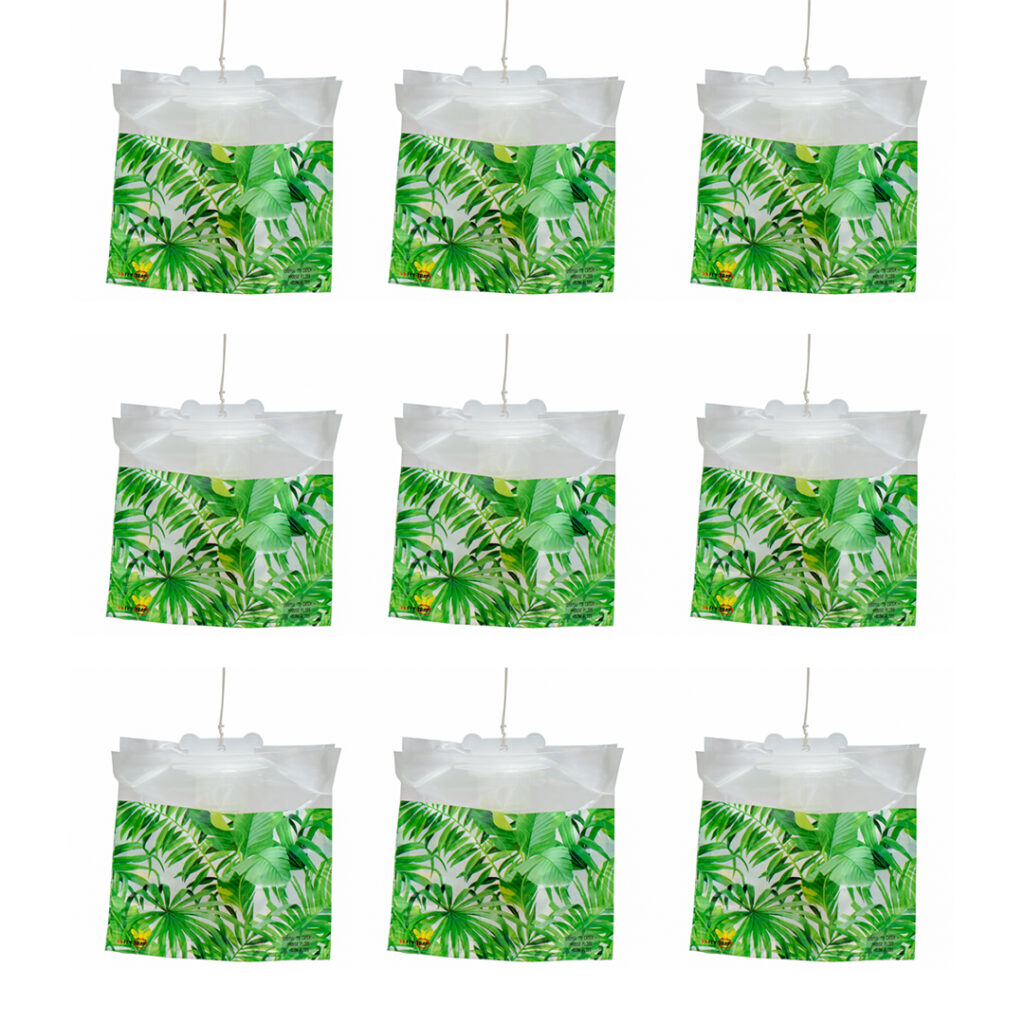
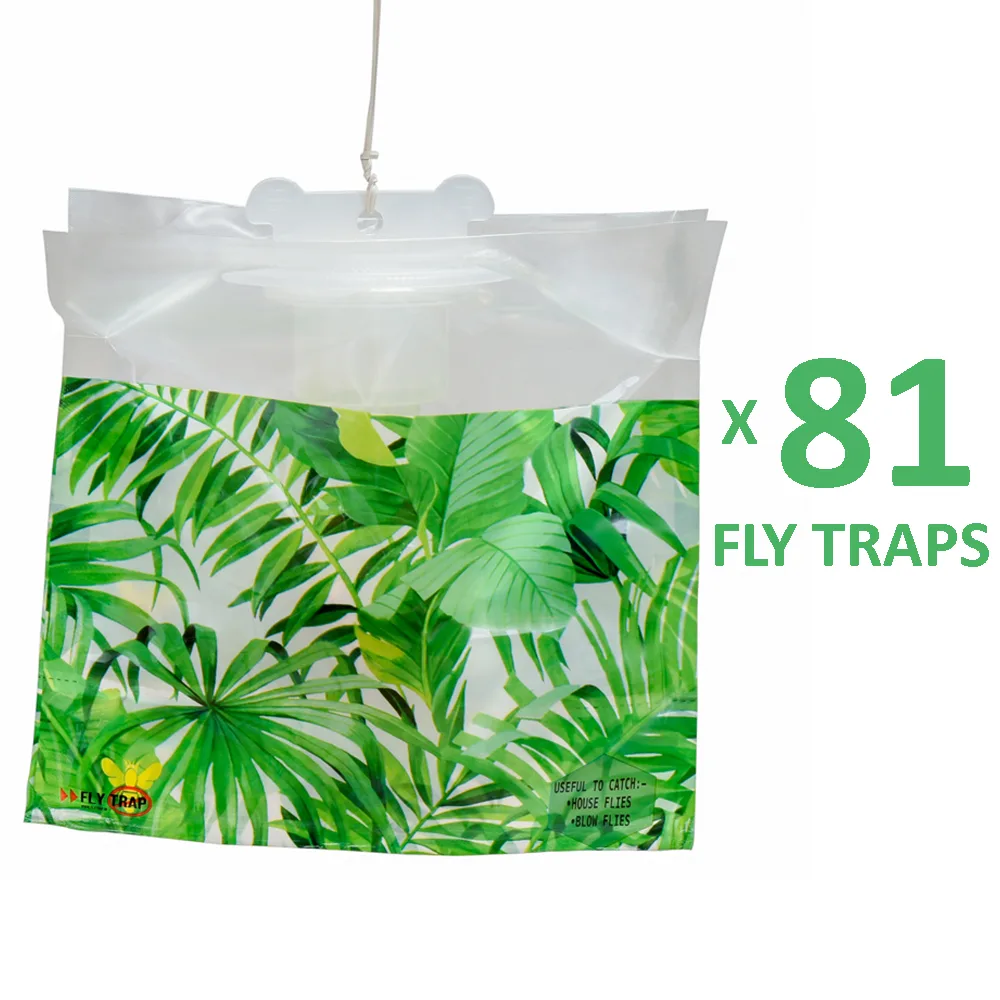
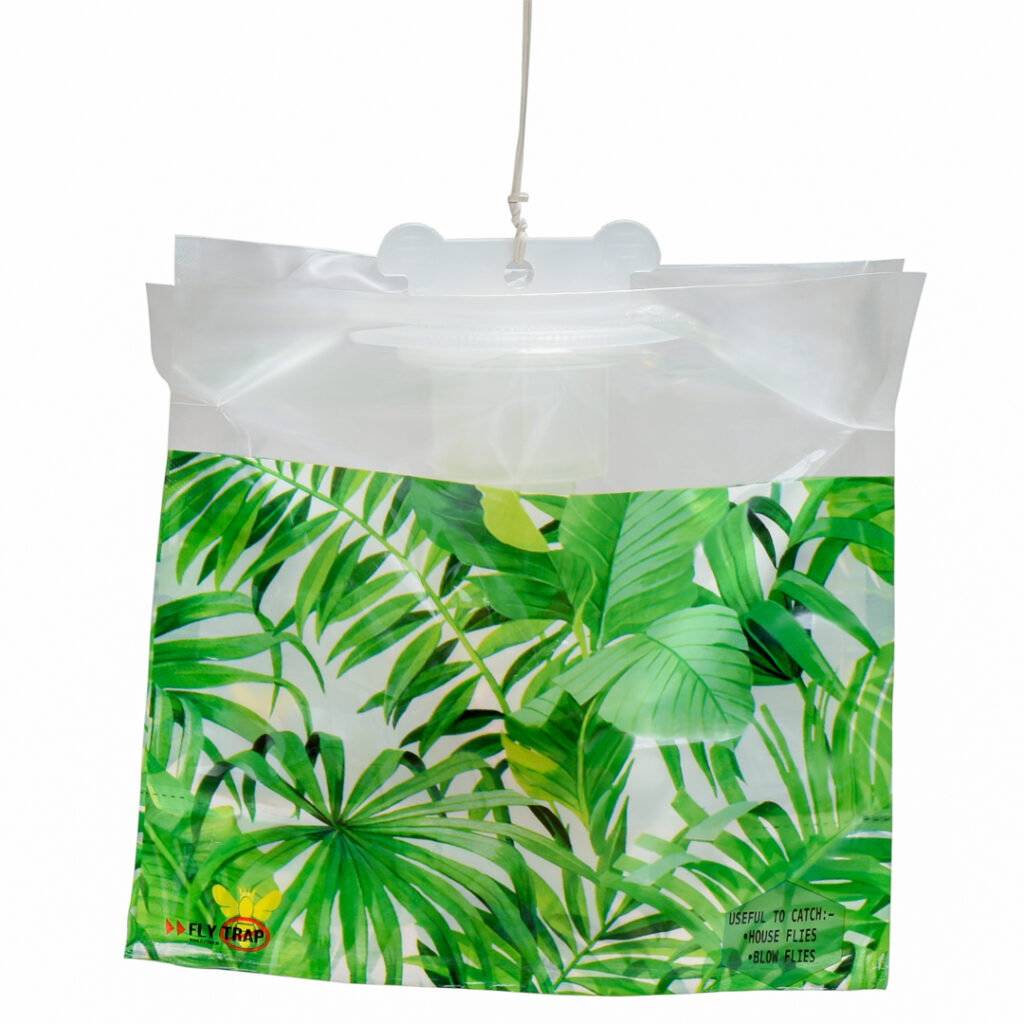
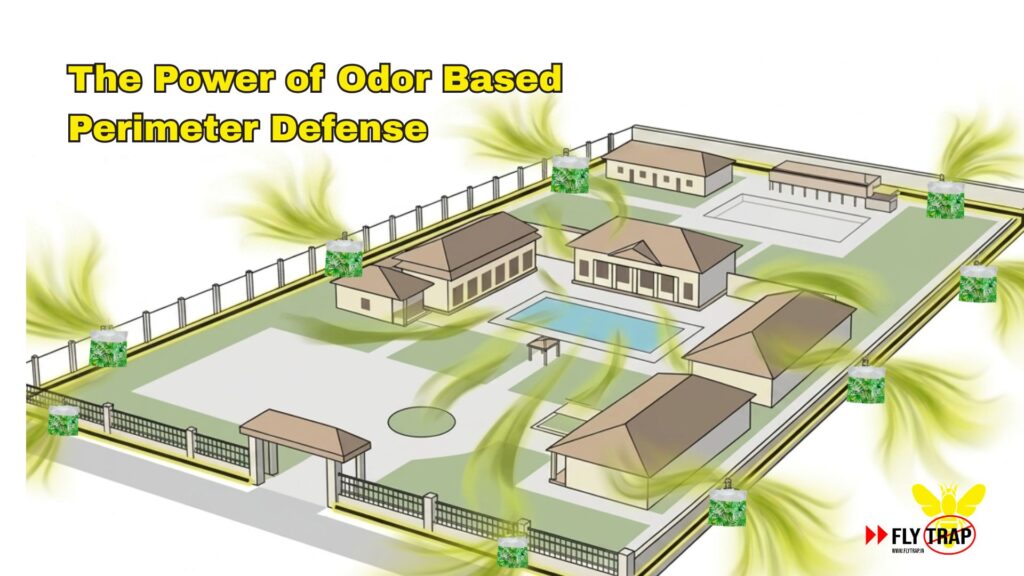
These traps utilize a fermentation-based organic bait. To a fly, this scent is irresistible. The trap sits quietly on the periphery of your stable or paddock, emanating an odor that draws pests away from the horses. It is a passive, “invisible” solution:
- For the Horse: Complete relaxation. No chemical residue, no stinging eyes, just peace.
- For the Staff: No inhaling clouds of insecticide during morning chores.
- For the Environment: A sustainable solution that targets pests without harming beneficial insects or creating toxic runoff.
Best Practices for Outdoor Fly Traps in Stables
Switching to organic control requires a strategic approach. It is not just about the product; it is about creating a system.
- Zone Defense (Placement is Key): Never place a fly trap inside the stall. The goal is to draw flies away from the horses. Hang traps 40 to 50 feet away from the main stable block along fence lines or near manure management areas.
- Early Intervention: The best time to install organic traps is in early spring. Catching the first few breeding females prevents thousands of offspring from hatching in the peak summer months.
- Consistent Perimeter: Unlike sprays that evaporate, organic traps work 24/7. Maintain a consistent perimeter of traps to act as silent sentinels for your facility.
We often judge the quality of a stable by the gloss of the coats and the cleanliness of the bedding. But true stable quality is also defined by what we don’t hear: the absence of frantic stomping, the absence of buzzing, and the absence of the chemical hiss.
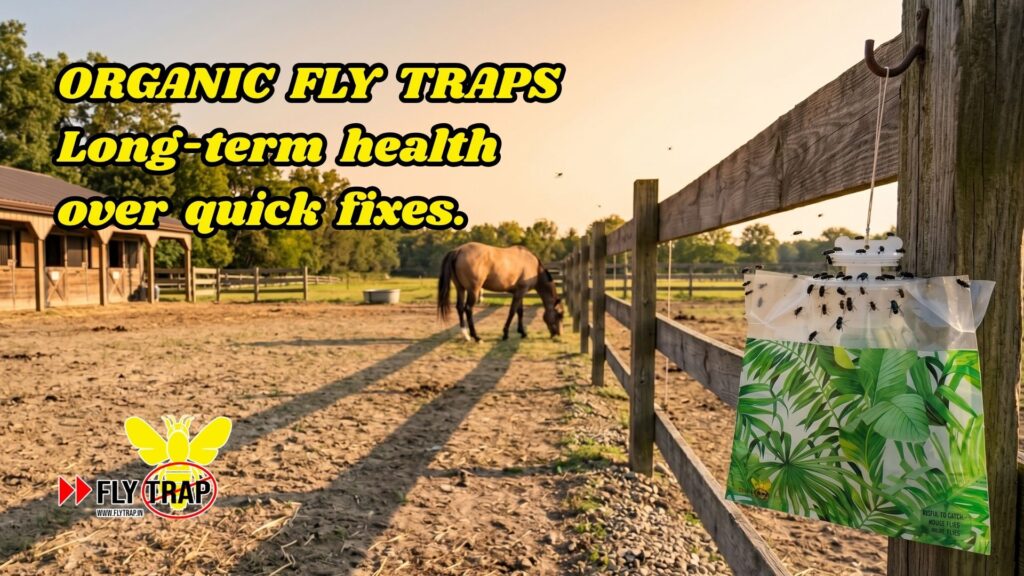
Organic fly traps make a statement that your facility values long-term health over quick fixes. Let the flies have their trap; your horses have better things to do.
Frequently Asked Questions (FAQ)
How often should I change an organic fly trap?
- Depending on the severity of the fly problem and the weather, a high-capacity organic fly trap typically needs to be replaced every 30 to 45 days, or once it is completely full.
Are organic fly traps safe around horses?
- Yes. Because they use a natural, non-toxic, fermentation-based bait rather than chemical insecticides, they are completely safe to use around horses, pets, and stable staff.
Where is the best place to hang a fly trap in a stable?
- Organic traps should be hung outdoors, approximately 40 to 50 feet away from the horses. Ideal locations include near manure piles, compost areas, or along the outer perimeter fences to draw flies away from the barn.
-
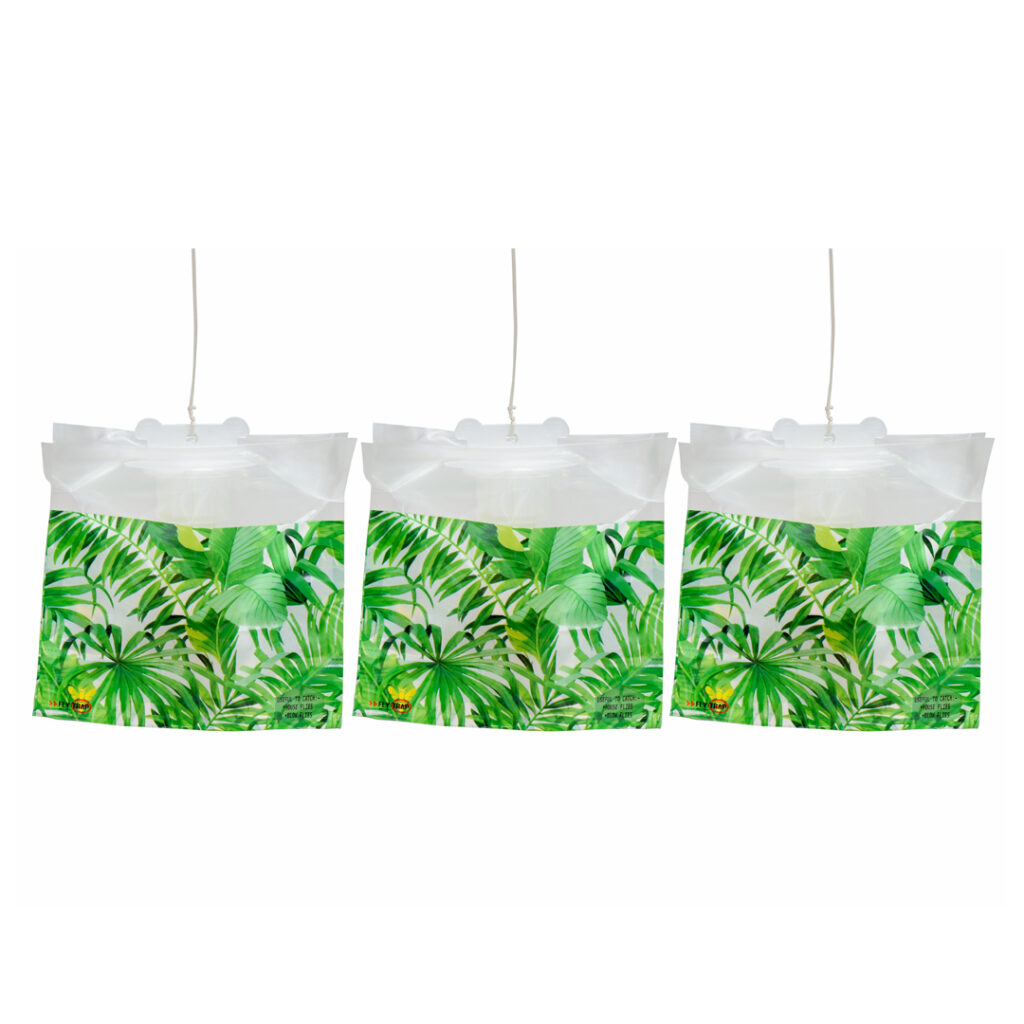
Disposable Fly Trap Set of 3
Original price was: ₹ 999.00.₹ 725.00Current price is: ₹ 725.00. Incl. GST -
Fly Trap Set of 12 – Organic, Non-Toxic Fly Control for Farm
Original price was: ₹ 3,499.00.₹ 2,599.00Current price is: ₹ 2,599.00. Incl. GST -
FlyTrap Disposable Fly Trap Set of 6
Original price was: ₹ 1,999.00.₹ 1,399.00Current price is: ₹ 1,399.00. Incl. GST -
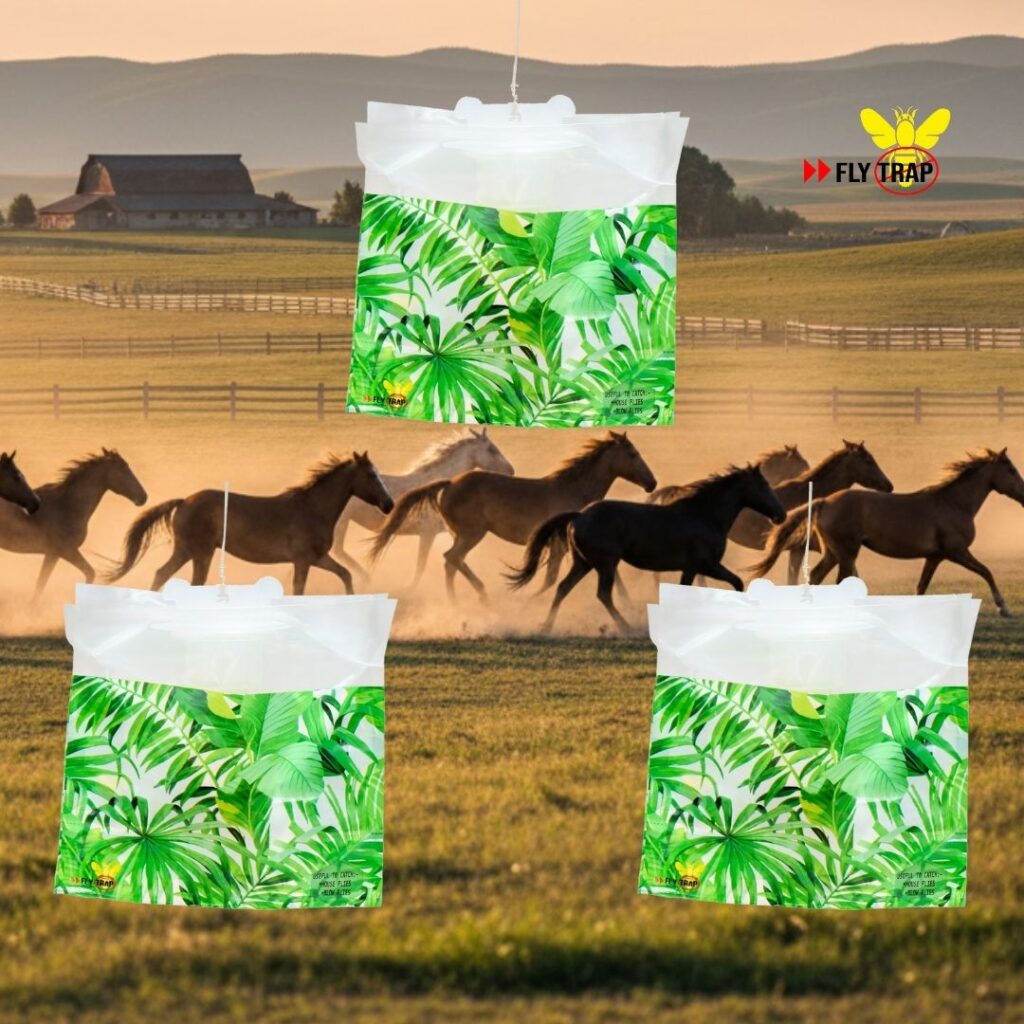
Horse Fly Trap Set of 3 – Organic & Effective Protection for Your Horses
Original price was: ₹ 999.00.₹ 725.00Current price is: ₹ 725.00. Incl. GST -
House fly Trap Set of 9
Original price was: ₹ 2,999.00.₹ 2,049.00Current price is: ₹ 2,049.00. Incl. GST -
Organic Disposable Fly Trap Bag Box of 81
Original price was: ₹ 26,999.00.₹ 16,999.00Current price is: ₹ 16,999.00. Incl. GST -
Organic Housefly Trap Bag for Outdoors
Original price was: ₹ 399.00.₹ 299.00Current price is: ₹ 299.00. Incl. GST