Key Takeaways
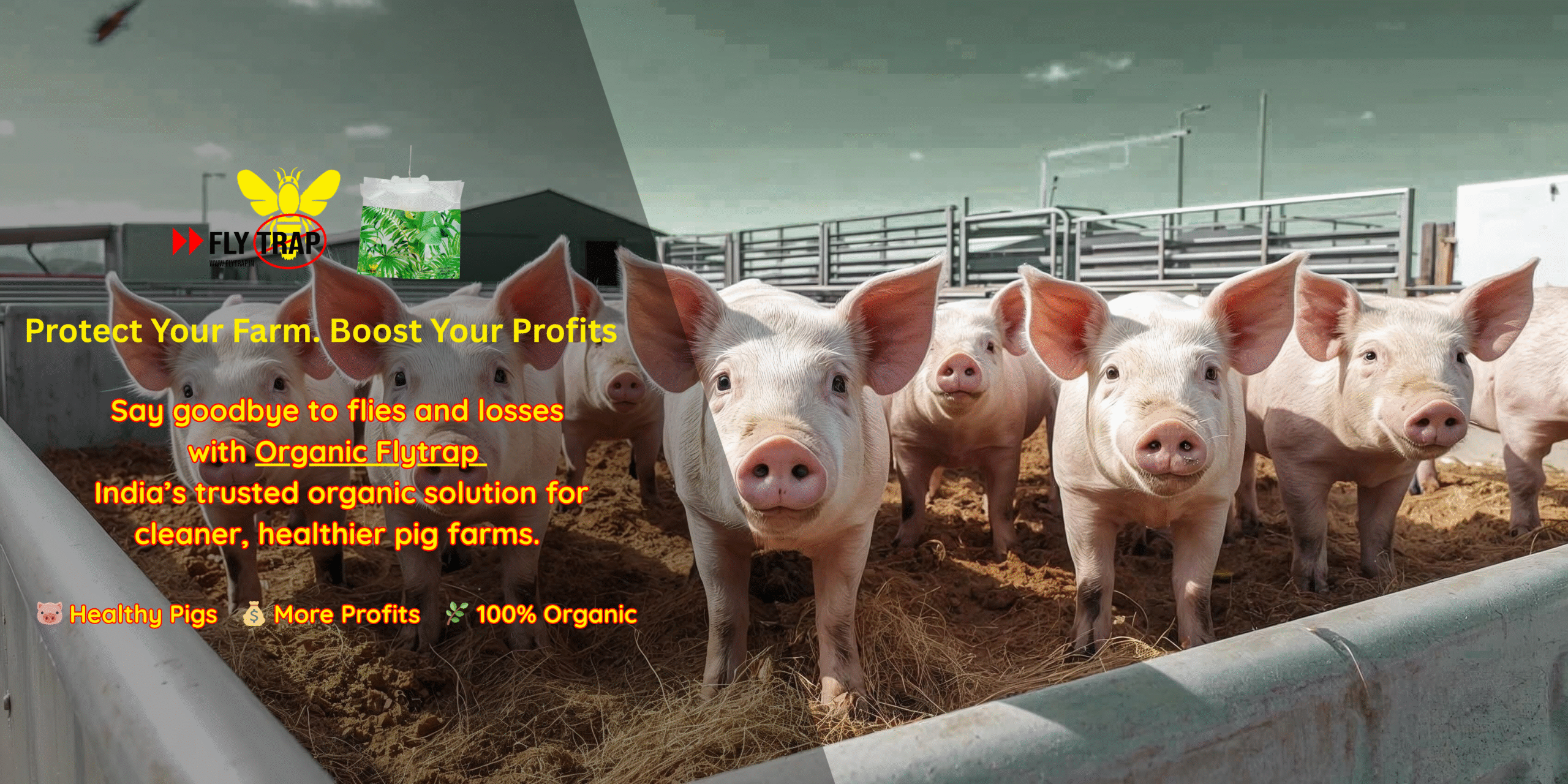
- Swine Health Protection: Flies in pig pens cause immense stress, leading to poor feeding behavior and reduced weight gain in pigs.
- Disease Prevention: Houseflies and stable flies are notorious vectors for swine dysentery and other serious diseases.
- Organic Defense: Using specialized organic fly traps provides a non-toxic, highly effective barrier against infestations.
- Strategic Placement: Hanging traps around the perimeter of the piggery ensures flies are drawn away from the animals and waste areas.
The True Cost of Flies in Piggeries
Maintaining a clean and stress-free environment in a pig pen is essential for profitable swine farming. Unfortunately, the combination of pig waste, moisture, and feed makes piggeries a prime target for severe fly infestations. When pigs are constantly harassed by biting flies, they become restless, which directly impacts their eating habits and overall weight gain.
Beyond stress, flies are carriers of dangerous pathogens. According to veterinary and swine health experts, flies can transmit diseases that devastate a herd’s health and increase veterinary expenses. For an in-depth look at this issue, read our dedicated breakdown on the problem of flies in piggeries and a solution to control them.
Why Organic Fly Control Beats Chemical Sprays
In the past, farmers relied heavily on chemical insecticides to control flies in pig pens. However, these chemicals pose a significant risk to the health of the pigs, especially sensitive piglets. Additionally, flies rapidly develop resistance to chemical formulas. The Environmental Protection Agency (EPA) encourages safe pest control methods, emphasizing the need to minimize toxic chemical use around livestock.
By switching to organic solutions, you ensure a bio-secure environment that prioritizes animal welfare without compromising on pest control efficacy. Learn more on our homepage about how to get rid of flies with an organic fly trap.
How to Keep Pig Pens Fly-Free
To effectively manage fly populations, you need a proactive defense strategy. This involves a combination of good sanitation practices – like frequent waste removal and managing moisture levels – and the deployment of high-capacity traps.
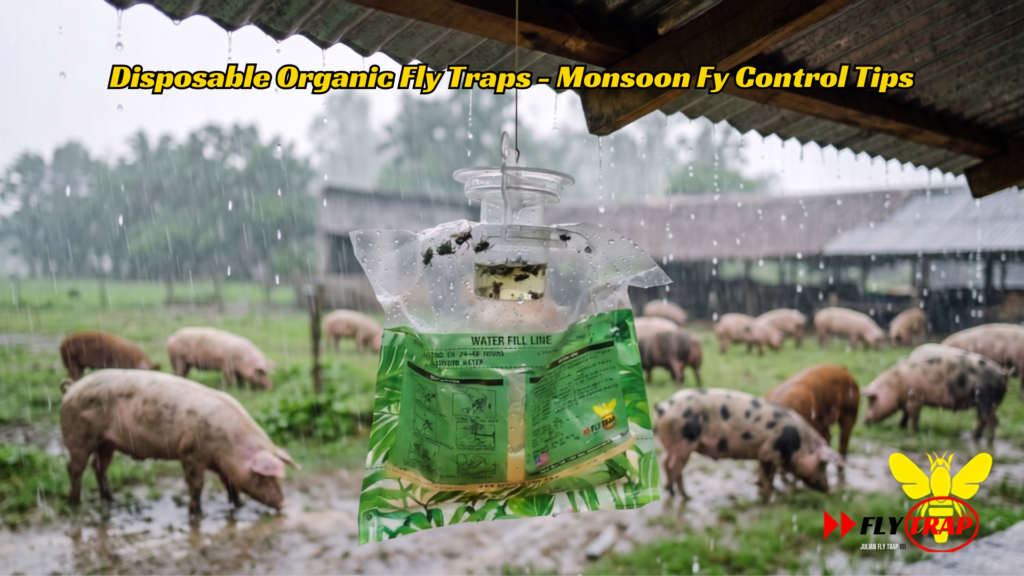
Organic traps utilize natural, food-based attractants that lure flies away from the pigs. Once inside the trap, the flies are unable to escape and eventually drown.
Choosing the Right Fly Trap
- Odor Control: Choose traps that are powerful enough to compete with the strong odors naturally present in a pig pen.
- Durability: Traps must be robust enough to withstand outdoor agricultural environments.
- Capacity: A single piggery can attract tens of thousands of flies daily, requiring high-volume traps.
For outdoor pig farming operations, we highly recommend the Organic Housefly Trap Bag for Outdoors, designed specifically for heavy-duty agricultural use.
Strategic Placement for Maximum Catch
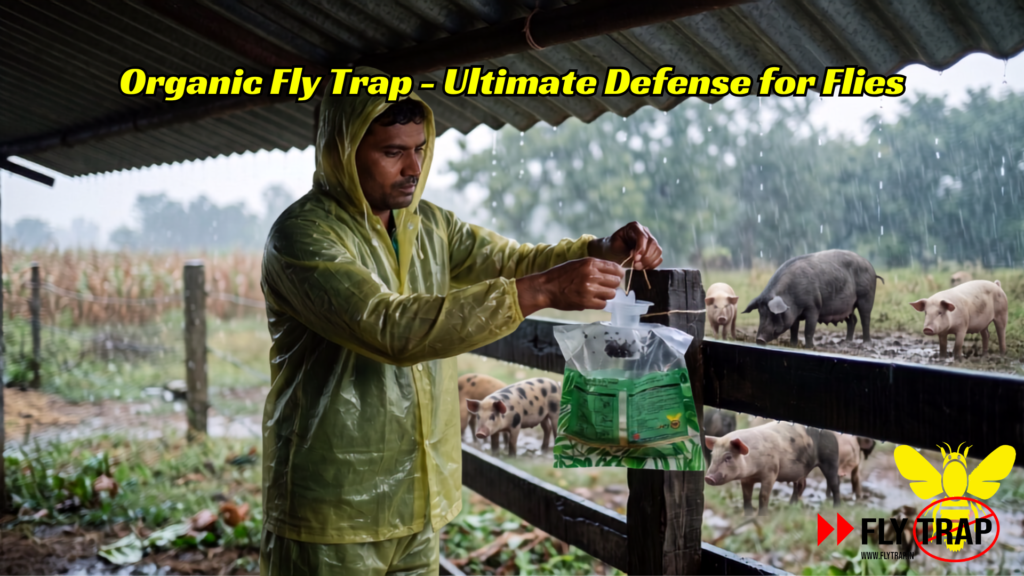
Where you place your traps is just as important as the traps themselves. In a piggery, it is crucial to hang the traps high enough so that curious pigs cannot reach them. Place them along the perimeter fence, near waste management lagoons, and around feed storage areas to intercept flies before they reach the animals.
Frequently Asked Questions (FAQ)
Are organic fly traps safe to use near piglets?
Yes. Because organic fly traps use non-toxic, pesticide-free attractants, they are entirely safe to use around adult pigs, vulnerable piglets, and farm workers.
How high should I hang a fly trap in a pig pen?
Traps should typically be hung at least 4 to 5 feet off the ground. This keeps them out of reach of the pigs while placing them at the optimal flight path height for houseflies and stable flies.
Do fly traps reduce the smell of a piggery?
While fly traps are not designed as odor neutralizers, reducing the fly population significantly decreases the spread of bacteria and disease-causing pathogens that contribute to foul odors. Effective fly control goes hand-in-hand with good waste management to keep the pig pen smelling manageable.