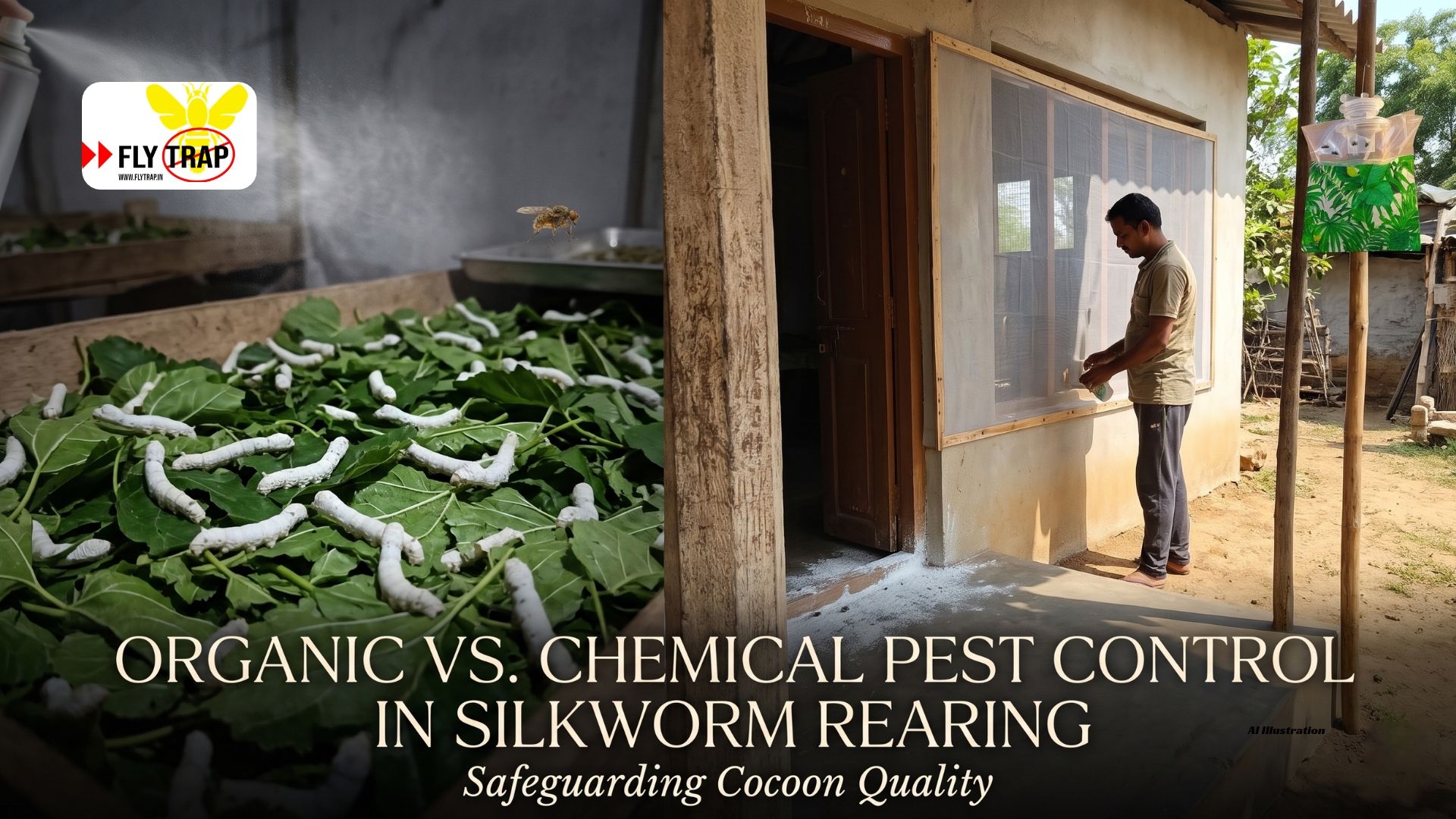
In commercial agriculture, reaching for a chemical insecticide when pests invade is often standard practice. In sericulture, however, this instinct can be catastrophic.
The silkworm (Bombyx mori) is not merely a farm animal- it is an insect. Because the silkworm shares nearly identical physiological pathways, nervous system architecture, and metabolic processes with common agricultural pests, any broad-spectrum insecticide capable of killing pest flies or beetles will kill your silkworms with equal or greater potency.
For sericulture farmers across major silk belts in India, from Ramanagara and Kolar to Dharmapuri and Malda, protecting the crop from devastating parasites like the Uzi fly (Exorista bombycis) is a constant struggle. When an infestation strikes during the crucial 4th or 5th instar stages, farmers face a tough choice: How do you eliminate lethal pests without harming hypersensitive silkworms?
This guide examines the stark differences between chemical and organic pest management in sericulture, the science of chemical toxicity in rearing houses, and how eco-friendly, non-toxic defense protocols safeguard both cocoon quality and market profits.
The Threat: Why Pest Control Cannot Be Ignored
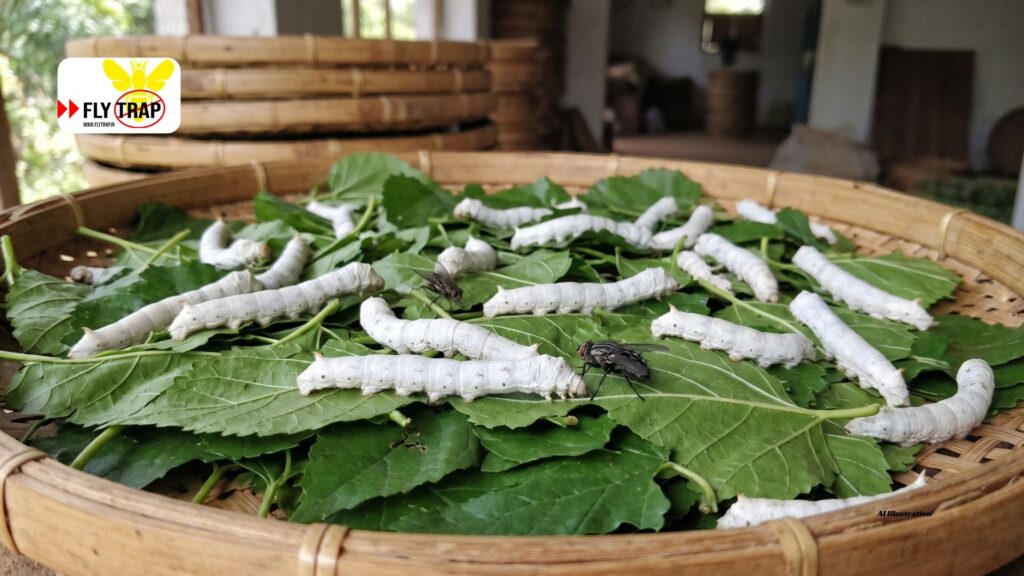
Before comparing methods, it is vital to understand the primary culprit threatening silkworm crops:
The Uzi Fly (Exorista bombycis)
The Uzi fly is a parasitic tachinid fly responsible for 10% to 30% of cocoon crop losses annually in tropical sericulture zones.
- The Attack: A single female Uzi fly enters the rearing shed and deposits 300 to 1,000 microscopic eggs directly on the intersegmental skin of late-age silkworm larvae.
- Internal Damage: The hatched maggot bores into the silkworm’s body cavity, feeding voraciously on haemolymph and vital tissues.
- Crop Devastation: If infested early in the 5th instar, the silkworm dies before spinning. If infested late, the maggot bores out after the cocoon has formed, creating a pierced cocoon (Uzi-damaged cocoon) that cannot be reeled into continuous silk thread.
Aside from Uzi flies, common houseflies (Musca domestica) and filth flies frequent rearing sheds, acting as mechanical vectors for lethal silkworm pathogens, including Grasserie (Nuclear Polyhedrosis Virus), Flacherie (bacterial/viral infections), and Muscardine (fungal infection).
The Perils of Chemical Pest Control in Sericulture
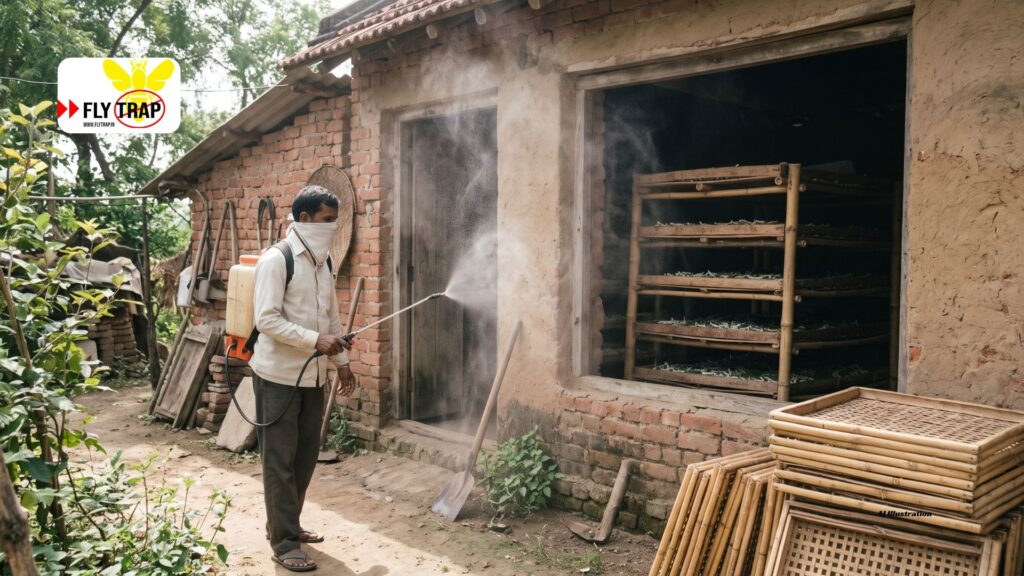
While chemical insecticides offer quick knockdown in conventional orchards and field crops, introducing them into silkworm rearing operations carries severe risks.
1. Zero Margin for Error (Colony Collapse)
Silkworms possess virtually no enzymatic defense against synthetic pyrethroids, organophosphates, or neonicotinoids.
- Airborne Vapors: Insecticide spray drift from nearby fields or aerosol sprays in the shed cause acute toxicity- manifesting as restless wriggling, oral fluid regurgitation, body paralysis, and total colony death within hours.
- Mulberry Leaf Contamination: Mulberry leaves picked from fields exposed to chemical drift remain toxic for 15 to 45 days. Feeding contaminated leaves to rearing beds causes catastrophic batch failure.
2. Micro-Dose Chronic Toxicity and Cocoon Degradation
Even sub-lethal concentrations of chemical pesticides that do not immediately kill larvae cause devastating physiological defects:
- Suppressed Silk Gland Development: Reduced secretion of fibroin and sericin proteins.
- Irregular Shell Ratio (SR%): Thin-walled, fragile cocoons that crush easily during transport.
- Poor Reelability and Filament Breakage: Chemical residues disrupt uniform spinning movements, leading to frequent thread breaks during reeling.
- Cocoon Staining: Stressed larvae excrete loose metabolic wastes inside the cocoon shell, causing stained cocoons that fetch bottom-tier rates at government silk cocoon exchanges.
3. Resistance and Human Health Risks
Pests like Uzi flies and houseflies rapidly develop chemical tolerance against repeated sprays. Furthermore, silkworm rearers spend 8 to 14 hours daily inside enclosed, humid rearing rooms; breathing chemical fumes in poorly ventilated sheds poses severe respiratory and neurological risks to farmers.
The Organic Advantage: Precision Without Toxicity
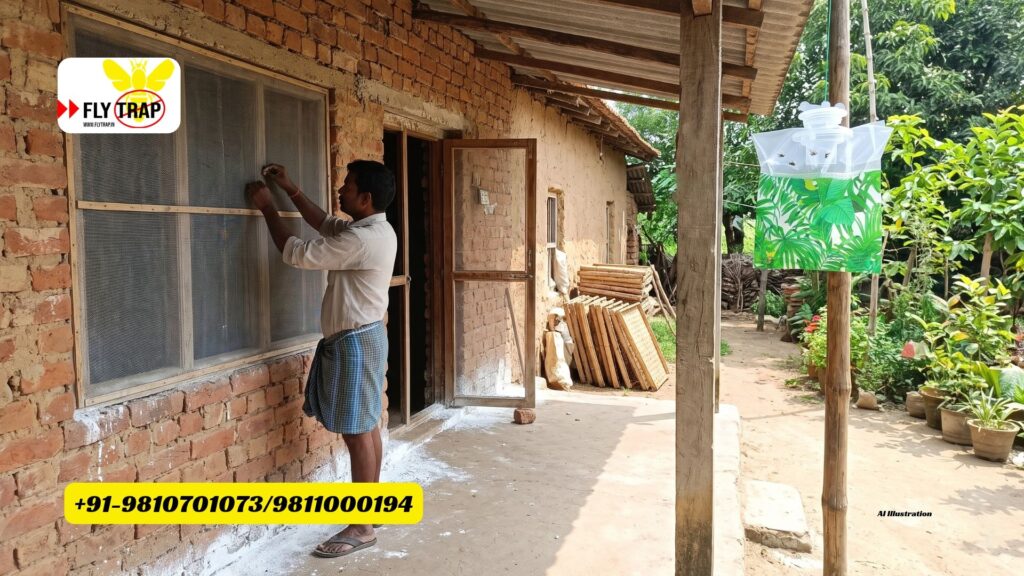
Organic pest control in sericulture relies on an Integrated Pest Management (IPM) model. Instead of spreading poisons throughout the ecosystem, organic protocols target the pest’s behavior, biology, and entry routes while leaving the silkworm completely untouched.
Key Pillars of Organic Pest Management in Sericulture:
- Physical Exclusion Netting:
- Fitting all doors, windows, and roof ventilators with fine nylon or wire mesh (mesh size 20 to 25) physically denies entry to gravid female Uzi flies.
- Installing an ante-room with double doors creates an effective airlock barrier.
- Odor-Based & Attractant Fly Trapping (The Clean Perimeter Shield):
- High-attractant, pesticide-free fly traps positioned outside shed entrances and around the perimeter intercept adult flies before they reach the rearing beds.
- Odor lures replicate biological cues that draw gravid flies away from the rearing trays and trap them securely inside collection chambers.
- Zero chemical residue: No aerosols or toxic molecules enter the rearing air space.
- Sanitation and Bed Disinfection:
- Timely removal of silkworm litter and unconsumed mulberry twigs.
- Dusting beds during moulting with traditional, safe dusting mixtures.
- Dumping silkworm refuse directly into deep composting pits covered immediately with a layer of dry soil prevents escaped Uzi maggots from pupating.
Direct Comparison: Organic vs. Chemical Pest Control
| Feature | Chemical Control Sprays | Organic IPM & Trapping Protocol |
|---|---|---|
| Silkworm Safety | High Risk (Spray drift or residue causes instant mortality) | 100% Safe (Zero chemical contact with rearing trays) |
| Cocoon Quality (SR% & Reelability) | Compromised by sub-lethal toxicity, uneven spinning, and internal staining | Maximum shell weight, uniform filament continuity, zero chemical stains |
| Reelability & Renditta | High filament breakage; poor renditta (higher cost per kg silk) | Superior filament continuity; optimal renditta at reeling mills |
| Pest Resistance | Pests rapidly develop chemical resistance | Physical & attractant-based traps bypass resistance entirely |
| Farmer Safety | Respiratory irritation, toxic vapor accumulation in closed sheds | Safe, non-toxic, eco-friendly handling |
| Cost Efficiency | Recurring expenses for costly chemical formulations | Durable trap hardware with economical seasonal lures |
How Organic Fly Control Directly Boosts Cocoon Market Value
When you sell your cocoons at wholesale markets, buyers evaluate three primary parameters:
- Defective Cocoon Rate (%): Pierced (Uzi-infested), melted, and stained cocoons are sorted out and sold at severe discounts (often less than 20% of prime value).
- Shell Ratio Percentage (SR%): Indicates how much raw silk can be recovered from the total cocoon weight.
- Renditta (Cocoon-to-Raw-Silk Ratio): The number of kilograms of cocoons needed to reel 1 kilogram of raw silk (lower is better).
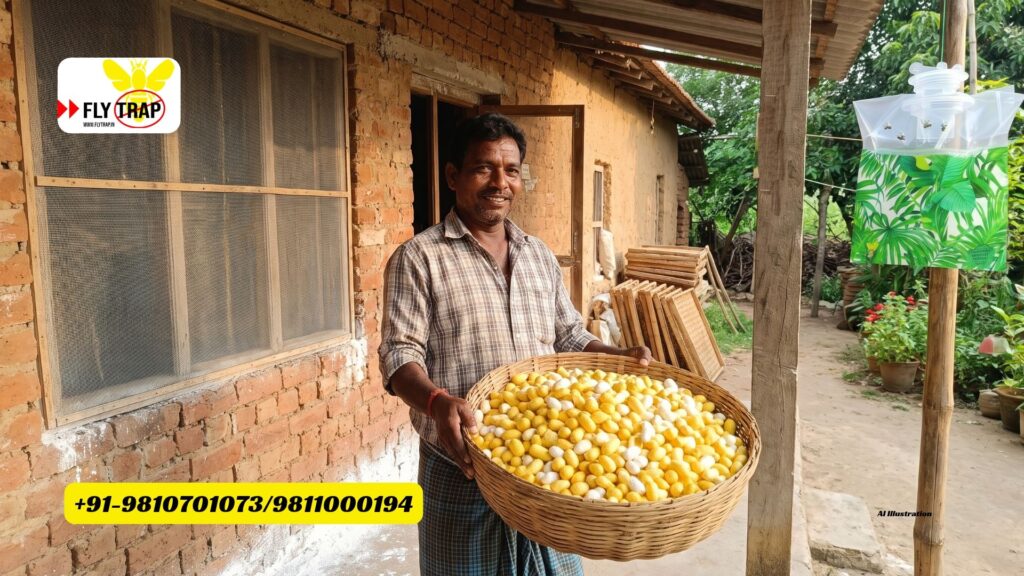
By using organic perimeter trapping and mechanical netting, you eliminate pierced cocoons caused by emerging Uzi maggots. Larvae feed uninterrupted through the 5th instar without sub-clinical chemical stress, producing dense, uniform cocoon walls. Your harvest qualifies as Grade-A Bivoltine / Multivoltine cocoons, securing the highest prevailing market bids.
Step-by-Step Protocol: Protecting Silkworms Without Chemicals
Phase 1: Pre-Brushing & Chawki Preparation
- Thoroughly wash rearing appliances (bamboo trays, stands, nets) with clean water and sun-dry them.
- Inspect window wire mesh (20-mesh) for tears or gaps.
- Place odor-based fly traps 15–20 meters away from the shed to clear outdoor fly clusters.
Phase 2: Late-Age Rearing (3rd to 5th Instar)
- This is when silkworms emit heavy vegetative and biological aromas that attract Uzi flies from kilometers away.
- Keep double-door ante-rooms closed at all times.
- Mount attractant-based fly traps near outer doorways and corners of the rearing verandah.
- Dust slaked lime on walkways and around rearing stand legs to deter crawling pests.
Phase 3: Cocoon Spinning (Mountages / Chandrikes)
- Keep chandrikes protected behind anti-Uzi mesh screens.
- Release Nesolynx thymus culture pouches near cocoon-harvesting and spinning zones.
- After harvesting cocoons, immediately submerge unspun or dead worms in 2% bleaching powder solution or bury them in sealed compost pits.
Frequently Asked Questions (FAQ)
Can I spray mild insecticides in the rearing shed before silkworms arrive?
No. Synthetic insecticides leave persistent micro-residues on wooden trays, walls, and rearing stands for weeks or months. When young larvae come into direct contact with treated surfaces, toxic absorption through their cuticle causes chronic flacherie-like symptoms and stunted growth.
How does an organic fly trap attract Uzi flies without toxic bait?
Organic fly traps utilize specialized kairomone and natural olfactory lures designed to mimic the volatile scent compounds that flies seek for feeding and egg-laying. The flies enter the funnel or trap chamber, are unable to escape, and dehydrate naturally—without releasing any toxic airborne gases into your shed.
What should I do if an Uzi fly enters the rearing shed?
Do not spray aerosol insect killers. Instead:
- Manually capture and destroy the fly using hand nets or sticky cards.
- Carefully inspect worms in the nearby trays for telltale black puncture scars.
- Segregate any stung silkworms immediately so emerging maggots cannot infest surrounding rearing beds.
Sericulture is an art of precision where the health of microscopic filaments depends entirely on the vitality of your silkworms. Sacrificing your crop’s health with toxic chemical sprays is a gamble no sericulturist needs to take.
By transitioning to an organic, IPM-driven fly control strategy, combining quality mesh barriers, strict shed sanitation, biological agents, and dedicated odor-based fly traps, you can eradicate Uzi fly damage, preserve superior cocoon reel-ability, and ensure top-tier auction prices every harvest.
