
Key Takeaways:
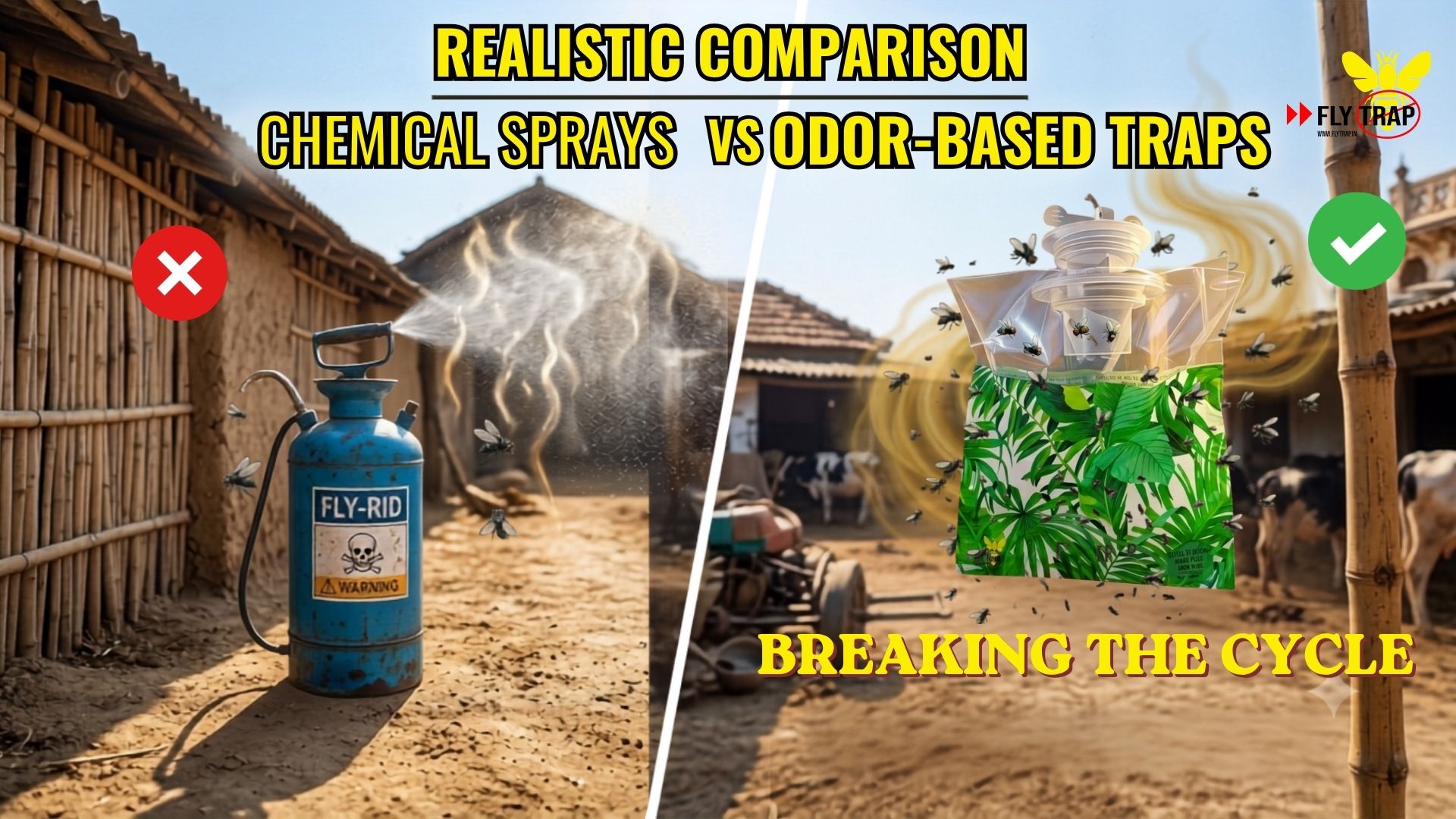
- Heat Reduces Chemical Efficacy: India’s intense tropical heat causes chemical sprays to evaporate quickly, drastically reducing their effectiveness against flies.
- Enhanced by Heat: Unlike chemicals, odor-based fly traps become more effective in hot weather as the attractant scent disperses further.
- Breaking the Cycle: Capturing adult female flies before they lay eggs is the most effective way to stop exponential population growth during the monsoon and summer.
- Eco-Friendly & Safe: Switching to disposable organic traps eliminates toxic residue risks, protecting both agriculture and the environment.
The Challenge of Fly Control in India’s Climate
India’s tropical climate – characterized by scorching summers and intensely humid monsoons – creates the perfect storm for fly populations to explode. As temperatures rise, the lifecycle of a housefly accelerates. What normally takes weeks can happen in just days, leading to overwhelming infestations on farms, in food processing units, and around resorts.
Historically, businesses and farmers have turned to chemical insecticidal sprays. However, the extreme heat causes these chemicals to degrade and evaporate rapidly. According to global health authorities like the World Health Organization, relying heavily on chemical pesticides not only leads to resistance but also poses severe health and environmental risks.
Why Chemical Sprays Fail in Tropical Heat
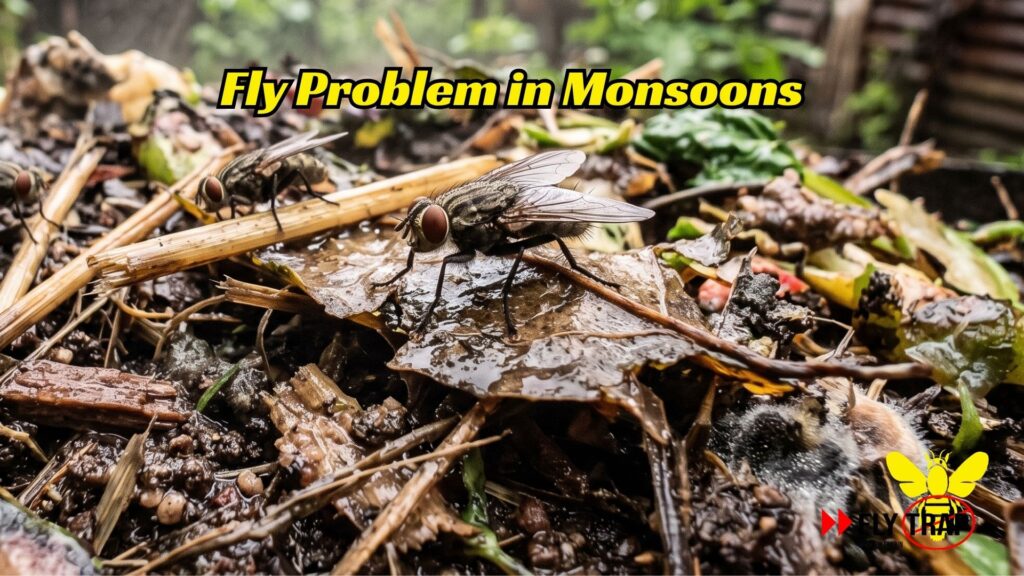
Chemical sprays operate on contact or short-term residue. In high temperatures, the active ingredients break down faster due to UV radiation and thermal degradation. Moreover, frequent monsoon rains wash away any remaining chemical barriers. This means you have to spray more frequently, spending more money while exposing your environment to higher levels of toxins.
For more insights on managing pests during the wet season, check out our Monsoon Fly Control Tips to Stop the Rainy Season Fly Explosion.
How Odor-Based Fly Traps Use Heat to Their Advantage
While heat destroys chemical sprays, it supercharges odor-based fly traps. These organic traps utilize a specialized, food-grade bait. When activated by water and sunlight, the bait begins to ferment. In India’s tropical heat, this fermentation process accelerates, producing a strong, irresistible scent plume that travels vast distances on the warm breeze.
This means the hotter it gets, the harder the trap works. Female flies, instinctively searching for a nutrient-rich place to lay their eggs, are drawn away from your facilities and directly into the trap.
Breaking the Breeding Cycle
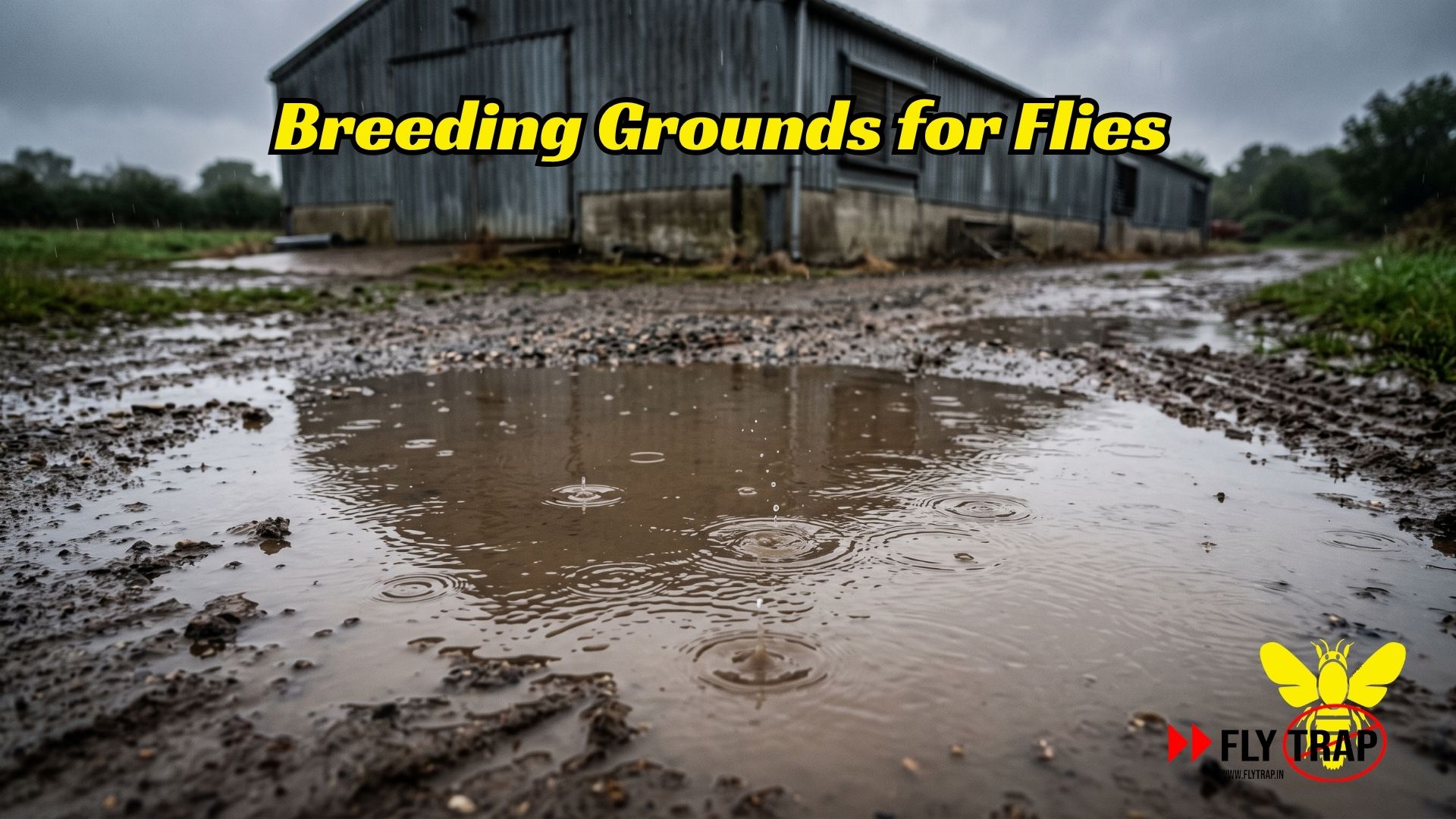
The key to long-term fly control is not just killing the flies you see, but stopping the next generation. A single female fly can lay up to 500 eggs. By capturing these females in an odor-based trap before they can reproduce, you effectively break the breeding cycle at its source.
To implement this on a large scale, consider deploying our high-capacity FlyTrap Disposable Fly Trap Set of 6 around your property’s perimeter.
The Sustainable Future of Pest Control
Transitioning from toxic sprays to organic, odor-based fly traps aligns with sustainable agricultural practices endorsed by organizations like the EPA. Whether you manage a dairy farm or a food processing unit, embracing organic fly control solutions ensures a safer, compliance-ready environment.
Frequently Asked Questions (FAQ)
Why do odor-based fly traps smell bad to humans?
The bait is specifically formulated to mimic decaying organic matter, which is exactly what female flies look for to lay their eggs. While it may smell unpleasant to us, it is a highly attractive, natural scent for flies. This is why traps should always be placed outdoors and away from main living or working areas.
How does the monsoon season affect odor-based fly traps?
Odor-based fly traps are actually aided by monsoons, which keep the environment humid—a climate that flies love. However, heavy rains might dilute the bait if the trap is not properly covered. Most high-quality organic traps are designed with umbrella-like tops to prevent rainwater from entering the capture bag.
Are odor-based traps more expensive than chemical sprays in the long run?
No. While the upfront cost per trap might be higher than a cheap bottle of spray, odor-based fly traps work continuously for 3 to 4 weeks without reapplication. When you factor in the labor and frequency required for chemical spraying – especially in hot weather – organic traps are far more cost-effective.